
Elements of Design - The Basics.
The elements of design are the "what" - the building block of any composition. There are seven elements of design: line, shape, direction, size, texture, color, and value.
The principles of design are the "how" - how we use these elements -- do we create contrast, balance, or repetition? To create harmony in a design, we need unifying elements, but to create visual interest, we need some contrast. We've gathered some examples of how you can implement this into your own design and decor projects:
Lines are everywhere. You can unify or contrast them by manipulating the color, size, or direction of the line. To create visual interest: keep some elements unified while contrasting others.

The unique texture of Milk Glass (an opaque or translucent, milky white or colored glass, blown ore pressed into a wide variety of shapes) is the unifying element, pulling together a grouping of items of various size and shape.

Plates of varying but repeating size add visual interest to this kitchen wall:

The varying, but repeated, pastel geometric patterns designed by John Lewis unify the look of this bed:

Value is the lightness or darkness of an object. Here, the lucite (so light, it's actually transparent) legs of the table add contrast against the other lines:

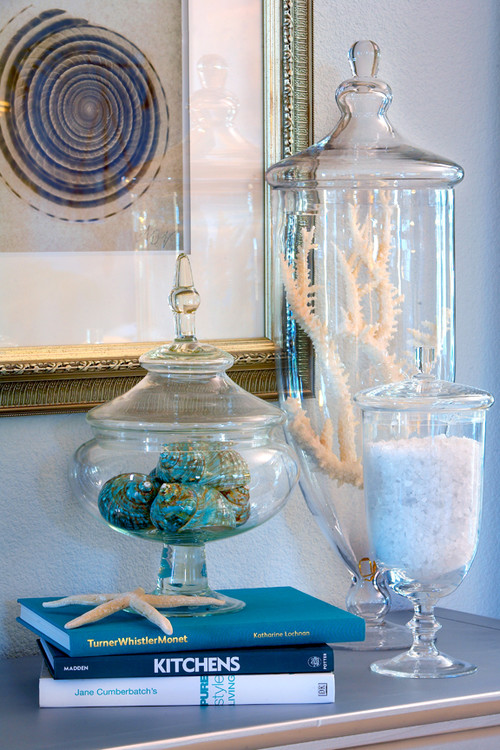
Designer Kerrie Kelly uses varying sizes of the same-shaped footed glass jars as a unifying element. Content of the jars are also all elements of the sea:
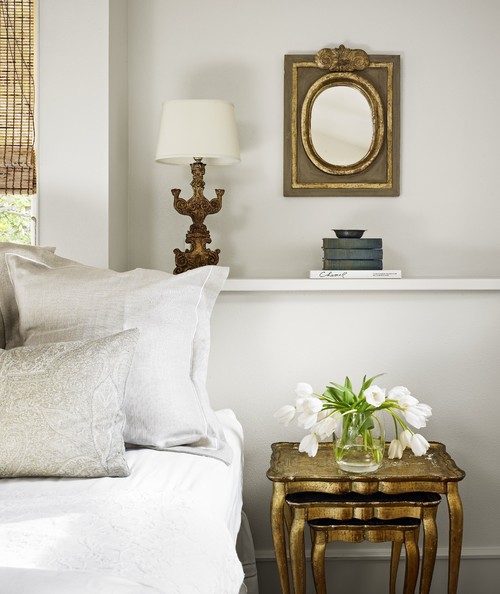
Finally, Hugh Jefferson Randolph Architects use the color gold as the unifying element:

No comments:
Post a Comment